Erb Publishing

@

Category: News

  • Erb Publishing Is Now Open to Playwrights

    For the past year, the Erb Publishing catalog has been home to my own plays, from full-lengths to ten-minute pieces and monologues. Starting now, we are opening the doors to other playwrights.

    I have spent about sixty years in theater as a writer, director, actor and producer. I know what it takes to finish a script, and I know how hard it is to get that script in front of the schools, community theaters and churches who should be producing it. That is the job Erb Publishing was built to do.

    Two Ways to List Your Play

    Free Digital Listing. No cost. Your play gets a catalog page with a synopsis, cast breakdown and a ten-page sample, and we sell the PDF script in our shop. You receive 20% of every sale, and the listing is non-exclusive.

    Membership Listing. $99 to set up your play, then $29 a year. We license your play for production to schools, community and stock theaters and pay you 50% of every licensing fee. We also design a print edition (10% of list price to you), raise your PDF royalty to 25%, and give you a playwright profile page, a featured social post, a spot in a Collection campaign and priority placement in the catalog.

    Under either option, you keep your copyright. Professional, film, television and audio rights stay with you.

    What We Are Looking For

    Full-length plays, one-acts, ten-minute plays, monologues and musicals, in any genre. We are especially interested in scripts a school or community theater can produce well: manageable casts, simple sets and a clear, playable story. We do not accept AI-generated scripts.

    How to Submit

    Everything you need is on our Submit Your Play page. We read every script and aim to reply within 8 to 12 weeks.

    I cannot wait to read your work.

    Tom Erb
    Founder, Erb Publishing

  • Spotlight: Hallam & Douglass, A Musical

    Spotlight: Hallam & Douglass, A Musical

    In 1752, a company of actors packed twenty productions into the hold of a ship and sailed for a country that had no professional theatre. Hallam & Douglass, an original musical by Tom Erb with music by Ellyn Fleming, tells their true story.

    Hallam & Douglass: A Musical, cover, by Tom Erb

    Twenty plays in the hold

    William Hallam managed Goodman’s Field Theatre in London and was close to bankruptcy. His brother Lewis, an actor known as an excellent low comedian, saw a way out: take the whole company to the colonies. They loaded the Charming Sally with drapes, lights, sets, props and costumes for twenty productions, and they brought their families. The crossing took six harsh weeks. When the weather allowed, the players rehearsed on the quarterdeck, so that when they landed they would be ready to perform. The company arrived at Yorktown, Virginia, on June 2, 1752.

    What they found was surprising, disappointing and inspiring. It is the story of the first professional theatre company in America, and everyone in it is real.

    Ten years of research

    Tom Erb spent ten years with the primary sources: colonial newspapers, ship manifests, government records and the early histories of the American stage by Dunlap, Seilhamer, Daly, Brown and Wemyss. The characters, the voyage and the events are factual and documented. The musical keeps its eye on what the record shows and lets the songs carry what the record cannot.

    The woman history did not name

    History records her only as Mrs. Hallam. Her accomplishments are well documented, but her first name was never written down. When her husband, Lewis Hallam Sr., dies in Jamaica, she partners with David Douglass, a rival manager, and together they build what became America’s first theatre empire. The story runs from 1752 to 1762, and she stands at the center of it. Bringing her out of the footnotes is a large part of why Tom wrote this show.

    A score in many styles

    The score has an overture and ten songs, with music by Ellyn Fleming and lyrics by Tom Erb. It moves through rap, sea shanty, soft rock, Broadway and pop ballad, because a company of working players from three centuries of theatre would not sound like one thing.

    • Ship of Dreams: the full-company opener, where the cast greets the audience and sets sail.
    • The Plan: William and Lewis Hallam pitch a rap-flavored scheme to take the company across the Atlantic.
    • We Will Be a Part of History: a soft-rock duet for Lewis and Mrs. Hallam, trading hope against cost.
    • What Am I Thinking: Lewis’s solo, from anxious questions to resolve.
    • What Are Your Intentions?: a tense sea shanty aboard the ship.
    • Saying Farewell: a wistful departure duet.
    • The Shores of the Colonies: the voyage anthem, with the whole company.
    • Your Secrets: a quiet ballad about what the ship carries besides the scenery.
    • Promise My Love: Mrs. Hallam’s pop ballad, from disbelief to grief to resolve.
    • Moral Dialogues: the title finale, with David Douglass and the company.

    Built for regional stages

    The show was designed for the theatres that will actually produce it. It plays with 13 to 15 actors and 6 to 15 musicians, so it can be staged with a small band or a full pit. A unit set with projection panels and wagon-based scene changes moves the audience from a London theatre to the deck of a ship to the colonies without a scene shop’s worth of scenery. Roles span a wide range of ages, from the Hallam children to the company’s veterans, with doubling built in.

    Why it works for schools and community theater

    It is American history told by performers, about performers, and it gives students and community casts something rare: a true story about the people who first put a play on an American stage. Teachers get a documented chapter of colonial history that comes with songs. Directors get a strong ensemble piece with real vocal variety, a clear way to cast across ages, and a show whose subject is the very thing the cast is doing.

    Two editions of the script

    The complete script, with every song printed in full, is coming in two editions: a standard 6 x 9 paperback and a Large Copy Edition on 8.5 x 11 pages, made for the rehearsal room, the music stand and the director’s table. See both editions. The soundtrack is coming in November.

    Interested in licensing Hallam & Douglass for your next production? Reach out directly at submissions@erb-publishing.com.

  • Spotlight: DIY, Do It Yourself

    Every theater has a crew nobody applauds. DIY, an original musical by Tom Erb, puts that crew in the spotlight.

    Written from the sales floor

    Tom Erb did not have to imagine this world. He worked for almost ten years at The Home Depot, on the floor, in the aisles, at the desks and the loading door. He knows what it sounds like when the primer shipment is short again, how a team covers six departments with three people, and how much a customer’s whole weekend can hang on one correctly mixed can of paint. He also knows the people: the ones who can find anything in the building, the ones who carry more than their job description, and the ones who never get a bow.

    DIY comes from that experience. The Orange Box and the Blue Cube, their owners, their employees and the corporate weather that moves over them are fiction, invented for the stage and not based on any real company or person. But the details, the humor and the heart of the work are earned. Tom wrote this show for the people he stood beside for a decade, and for every audience member who has ever worked a shift like theirs.

    Two neighboring hardware stores, the Orange Box and the Blue Cube, share a building, a receiving door, a long history and one financial covenant. A strip of tape divides the floor. Over one storm weekend, from Friday morning to Monday, that tape is going to be tested. A regional director arrives with a camera crew, a contract and a plan to turn the whole thing into a reality show. Only one storefront will survive the review on Monday unless two former partners can agree on something for the first time in years.

    The story

    Bob owns the Orange Box. Alice owns the Blue Cube. They were once partners in business and in love, and they have not agreed on so much as the electric bill since. Their employees have made peace with the line on the floor long before the owners have. When Diane Reeves of Meridian Retail Holdings lays the original signature page on the counter, the stakes stop being abstract: one store consolidates, some jobs transfer, and the cameras want a show about who wins.

    What follows is a story told in two acts and twenty-five songs. Jill, the assistant manager who has accepted gratitude in place of authority, writes the plan that might save both stores. Mark, the newest hire, is the one who notices what everyone else has forgotten. Tim, a practiced comic, finds that a friendship can make room for the truth. Lisa discovers that useful work and consent can be a kind of courage. And a producer’s assistant named Casey has to decide whether a usable story and a truthful one can be the same story.

    The cast is the band

    The score is played onstage by the employees themselves, a band called Tommy Erb. Bob fronts it on lead vocals and rhythm guitar. Al plays lead guitar, Tim the fiddle, Heidi the bass, Mark the drums and Karen the keyboards, while Alice, Jill, Lisa and Jack carry the harmonies. In the early scenes, separate pools of light make the same players look like rival factions. When the two stores finally join forces, the audience sees what the score has been saying all along: it was always one band.

    The music moves through Broadway comedy, patter songs, duets, character ballads and big production numbers, with acoustic and classic-rock color underneath. Four recurring themes bind the show together: a four-note welcome figure, Diane’s descending contract figure, the Lumber Love theme and Jack’s short storm-warning pulse.

    Songs worth knowing

    • The Fine Print: Diane’s alto belt number, where a loan that has been quietly sitting behind the door comes into the light.
    • Tool Tango: a company dance number that turns the sales floor into a ballroom.
    • Permission Was Never Coming: the Act I finale, where the staff stop waiting to be told it is allowed.
    • Lost in Aisle 9: Mark and Lisa on a flashlight search through the stock, finding more than they came for.
    • Nobody Claps for the Crew: the ensemble anthem for every person who makes the show happen without a bow.
    • What the Numbers Don’t Show: Diane’s late reckoning with everything a spreadsheet leaves uncounted.
    • The House Lights Are Still On: the title finale, sung as Bob peels the last of the tape off the floor.

    Built for real stages

    DIY was written with the practical theater in mind. One fixed unit set becomes the sales floors, the garden center, Aisle Nine and the loading area through light, signs and mobile stock. The storm itself stays offstage, so there is no spectacle to build. The cast is twelve named roles plus a flexible ensemble of customers, camera crew, delivery workers and neighbors, with doubling built into the plan. Actors who play an instrument can set it down for a demanding scene, and the script describes how the band reduces its texture to cover, so no one is asked to sing, play and move stock at once.

    It also treats its subjects with care. The mental-health storylines are written as fiction, with staging notes that protect privacy and choice. Tim’s appointment is an action, not a cure. Lisa’s boundary does not depend on a romance. The show asks the audience to believe in people, not miracles.

    Why it works for schools and community theater

    Nearly everyone has worked somewhere like this, or shopped in it, or loved someone who did. The setting needs no explanation, the laughs come from recognition, and the emotional turns are earned by the work rather than by the weather. Because the author spent almost ten years on a real sales floor, the dialogue, the schedules, the lunch-break arguments and the quiet acts of care ring true to the actors who speak them. It gives a director a strong ensemble show with real vocal variety, parts that reward actors of different ages and ranges, and a score the cast can truly play.

    Two editions of the script

    The complete performance script, with all twenty-five songs printed in full, is available in two editions. The standard 6 x 9 paperback is $20. The Large Copy Edition, on 8.5 x 11 pages made for the rehearsal room, the music stand and the director’s table, is $35 and includes the soundtrack: all twenty-five original songs through a private listening page, so your cast and band can hear the show before the first rehearsal. See both editions and the song list, or hear samples from the soundtrack.

    Interested in licensing DIY for your next production? Reach out directly at submissions@erb-publishing.com.
  • Not Auditioning Right Now? Join the SW Florida Talent Registry Anyway

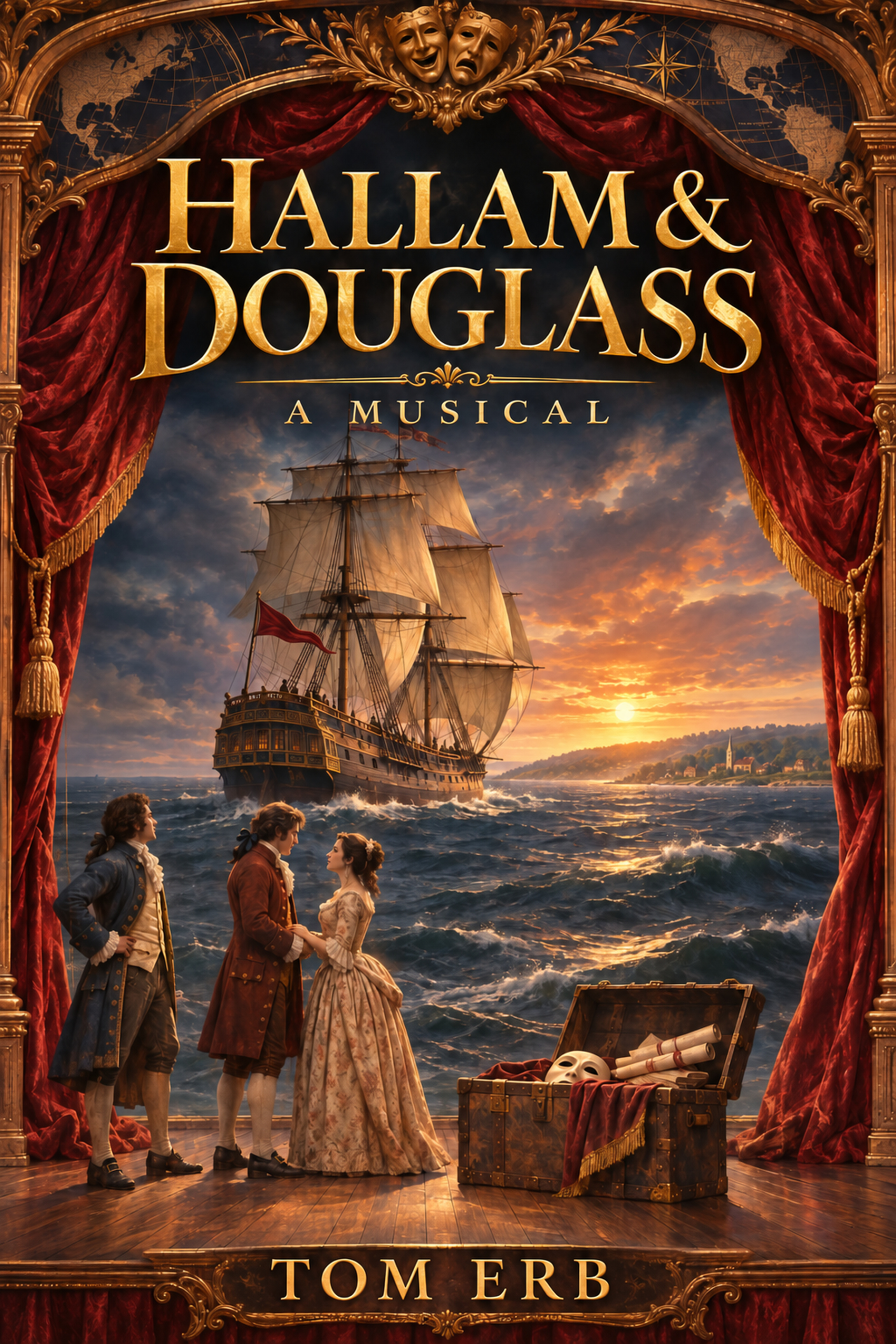
    The SW Florida Talent Registry started as a way to cast Building Paradise, Tom Erb’s Summer 2026 workshop production in Venice, Florida. But signing up is not tied to that one show. It is an ongoing list, and it is worth joining even if this particular production is not the right fit for you.

    Why It Outlasts One Production

    As more Erb Publishing titles get picked up by schools and community theaters around the region, a standing list of local actors, directors, stage managers, stagehands, designers, and musicians becomes more useful, not less. The registry is where that list lives.

    What It Takes

    If you’re auditioning, bring a headshot and a resume or CV. If you’re applying as a director, designer, crew, or musician, bring whatever best shows your work, a resume, portfolio link, reel, or bio all work. Auditions and interviews, when they come up, are private and scheduled individually based on your materials and your location. Signing up takes about five minutes.

    Join the SW Florida Talent Registry.

  • Now Casting: Building Paradise, Wedding Secrets, and Ghost Note

    Now Casting: Building Paradise, Wedding Secrets, and Ghost Note

    We asked for actors. You asked us for more.

    Erbana Productions is casting three shows right now, Building Paradise, Wedding Secrets, and Ghost Note, and by popular demand the registry that used to be actors-only is now the SW Florida Talent Registry, open to directors, stage managers, stagehands, designers, and musicians too.

    One sign-up puts you in consideration for all three shows and everything cast after them. We’re not accepting submissions outside the registry, auditions are private and scheduled individually.

    Register at erbanaproductions.com/talent-registry →

    Read the full announcement on the Erbana Productions site.

  • Three New Titles Now Available in Paperback

    Three more Erb Publishing titles have gone to print. Corruption Has a Face, Cissie, and Dance of the Woolly Monster are now published in paperback through our print-on-demand partner, joining Standing Room Only as titles you can hold in your hands, not just read on a screen.

    This is the first news out of Erbana Productions, the umbrella home for Erb Publishing, Erbana Repertory Theatre, and the SW Florida Actors Registry. More is coming from every corner of it in the weeks ahead.

    Corruption Has a Face is a full-length drama in two acts. When Diane comes forward with what she knows, the fallout reaches every desk in the building. It follows the federal employees, attorneys, and administrators of a Washington, D.C. agency as a whistleblower’s report forces each of them to decide what loyalty is worth.

    Cissie traces the life of Bertha Honore Palmer from a Chicago debutante to one of the shrewdest developers and social forces of her age, through marriage, motherhood, grief, and the land deals that helped shape Venice, Florida. A single actress plays Bertha from young womanhood into her sixties, with a company of four moving through the family, friends, and rivals around her.

    Dance of the Woolly Monster is a comedy for a five-person ensemble. A small book club takes on Gary Zukav’s The Dancing Wu Li Masters, and the physics turns out to be the easy part. Five neighbors, still figuring out who they are to each other, run into new ideas colliding with old grudges, harder history, and the things nobody in the room wants to say out loud.

    All three join Standing Room Only as paperback editions from Erb Publishing, now available through our shop. Visit each play’s page in the Catalog for the full script, licensing details, and casting notes, or head straight to the Shop to order your copy.

  • New Special Offers: Free First Productions and Free Seasons

    Erb Publishing is introducing three standing offers for the schools, community theaters, and independent producers we work with. Here is what is new.

    Free Digital Listing

    Every script accepted into the Erb Publishing catalog can get a free digital listing on erb-publishing.com, with a synopsis, cast size and running time, and PDF script sales. There is no charge to the playwright. Playwrights who want production licensing and a print edition can choose a Membership Listing. See Submit Your Play for details. Hardcopy printing through an outside print partner is coming soon for theaters that want a bound script.

    Free First Production

    Any theater producing its first Tom Erb play pays $0 in licensing fees for that production. Script purchase is still required, but the licensing fee itself is on us, one time, for each new theater working with Erb Publishing.

    Free Season, On Us

    Theaters programming four or more Tom Erb plays in one season license the entire season for $0. Script purchase is still required for each show, but licensing fees for the whole season are waived.

    Standard licensing fees, before any offer above, run $11 to $79 per performance depending on a play’s length. Full details on all three offers and the fee schedule are on our Special Offers page. Questions? Reach out to submissions@erb-publishing.com.

  • Licensing Made Simple: How Schools and Community Theaters Work With Erb Publishing

    Licensing a play should not be more complicated than the production itself. Here is what the process looks like when a school or community theater licenses a title through Erb Publishing.

    Find the play

    Start with the catalog, filterable by category, cast size, and running time, so you can narrow things down to what actually fits your program and your cast.

    Preview it

    Most catalog pages include a synopsis, cast and genre details, and a short explainer video, enough to make a real decision before you request the full script.

    Request licensing

    Use the “Inquire About Licensing” button on the play’s page, or email submissions@erb-publishing.com directly, with your production dates and venue.

    Standard licensing fees run from $11 to $79 per performance depending on the play’s length, and script purchase is separate. New theaters get their first production free, and any theater programming four or more titles from our catalog in a season licenses the whole season free. See our special offers for the full breakdown.

    Work directly with the source

    Erb Publishing is a small, playwright-founded house, not a large clearinghouse. Licensing questions get answered by people who know the material, and terms can be worked out directly rather than through layers of a large organization.

    Browse the full catalog at erb-publishing.com/catalog to find your next production.

  • Spotlight: Building Paradise

    Building Paradise is one of the full-length historical dramas in the Erb Publishing catalog, written by Tom Erb.

    The play also has its own dedicated page on tommyerb.com, with more background on the production and the story behind it. Erb Publishing is where a school or community theater goes to actually license and stage the play.

    Why it works for schools and community theater

    Historical drama gives a cast and a director real material to dig into: a specific place and time, real stakes, and characters shaped by history rather than invented from nothing. It is a strong fit for a program looking for a full-length main-stage piece with substance.

    Watch before you license

    A short “Watch the Explainer” video is available on the play’s Erb Publishing catalog page, giving directors and drama teachers a quick preview before requesting the full script.

    Interested in licensing Building Paradise for your next production? Use the “Inquire About Licensing” button on its catalog page, or reach out directly at submissions@erb-publishing.com.
  • How to Submit Your Play to Erb Publishing

    Erb Publishing is open to submissions from playwrights writing for schools, community theaters, and independent producers, not only from our founder, Tom Erb.

    What we are looking for

    • Full-length plays, generally 60 minutes or longer
    • One-act plays
    • Ten-minute plays
    • Monologues, standalone or in a themed collection

    All genres are welcome: comedy, drama, musical (book and lyrics), family and youth theater, and more. The common thread is that the material has to be genuinely stageable by a school or community theater: reasonable cast sizes, practical production demands, and a script that is ready to be read and cast, not a rough draft.

    How to submit

    Use the submission form on the Submissions page to send your script. It walks through the same details we look for: title, category, cast size, running time, and a link to the script itself. Prefer email? You can also send everything directly to submissions@erb-publishing.com.

    What happens next

    Every submission is read for fit with the catalog. If a script is accepted, Erb Publishing handles the publishing and licensing side, so the playwright does not have to manage rights requests and contracts directly.

    Full details are on the Submission Guidelines page.